Copper Foam As A Microbe Filter
Feb 15, 2023
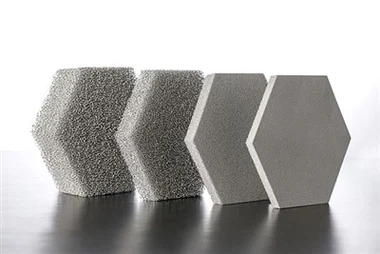
Researchers have demonstrated how copper foam can be used as a highly efficient, long-lasting filter for reusable masks and air cleaners in a new study.
Copper nanowires have been transformed into metal foam that can effectively filter out microbes by researchers. According to the researchers, the foam could be used in face masks and air filtration systems.
Since the COVID-19 pandemic began, people across the globe have been wearing face masks to protect themselves from catching the virus. However, many of these face masks are not easily disinfected.
When a person coughs or sneezes, for example, respiratory viruses release small droplets and aerosolised particles into the air, which can remain airborne for hours, so materials that can trap the particles are ideal for use in face masks and air filters. Metal foams are tough, and their small pores and large surface areas suggest they could be useful.
Copper foams were developed and tested by researchers to see if they could remove submicron-sized aerosols while also being durable enough to be decontaminated and reused.
Metal foams were created by harvesting electrodeposited copper nanowires and casting them into a free-standing 3D network, which was then solidified with heat to form strong bonds. To further strengthen the material, a second copper layer was added.
The copper foam held its shape under pressure and at high air speeds in the tests, implying durability for reusable face masks or air filters. It could also be cleaned using soap and water or compressed air.
The researchers also discovered that the metal foams had excellent filtration efficiency for particles ranging in size from 0.1 to 1.6 m, which is important for filtering out coronavirus particles. Their most effective material was a 2.5mm-thick version with copper accounting for 15% of the volume and a large surface area that trapped 97% of 0.1-0.4 m aerosolised salt particles.
The foams' breathability was also comparable to that of commercially available polypropylene N95 face masks. The team also stated that because the new material is copper-based, the filters should be resistant to cleaning agents, allowing for a variety of disinfection options, and its antimicrobial properties will help kill trapped bacteria and viruses.